The Nazis stormed into the house of Stanislavsky Lech, who was Jewish, herded the entire family out at gunpoint, packed them into an overcrowded train, filled with the stench of death and despair, and sent them to Krakow.
Then, before his eyes, Lech saw his entire family shot. Somehow, he managed to live from one day to the next, in a numb, oblivious, zombie-like state. Impatiently, he awaited his own death. But one day, he realized, that his own death was not an unavoidable truth. He could, in fact, do something about it: he could make an attempt to escape.
Once he had made his decision, he didnt know how to execute it. He only knew one simple thing: his decision was irrevocable, and, somehow, he had to find a way to act on it.
As the weeks passed into months, he interrogated his fellow prisoners. How can we escape? he would ask. He became a nuisance, an irritation. Its hopeless, they would echo. Stop hurting yourself, they would plead. Some would abuse him openly; others would turn away in silence.
In turn, he rejected their answers, their silences, their overbearing despair. There has to be a way, he told himself, and I will find it. This is my revenge: by surviving I will prove that the Nazis arent invincible and that they dont have complete control of our wills and that they cant do what they like with us.
Each day he would run a dialogue through his head. Today I choose to escape from this nightmare. I will not continue to be a victim. I will not accept these conditions. I am a man, with rights and dignity, and I will, so help me God, find a way to let the whole world know about what is going on here. I will escape. There is no doubt in my mind. How can I escape today, perhaps right now? There is a weakness in their security.
They cannot watch us every minute. There is something I need to find, and I will find it today, something that I have overlooked, something that will bring me freedom. There is a weak link here, somewhere. I will find it.
The urgency of his question pounded on his heart and mind every waking moment, and it followed him into his dreams.
Then, one day, as dismal as any other, he saw what had been before him all along. The Nazis would let the corpses of naked men, women and children, shot because they were too weak to work in the labor camp, pile up on the ground before a truck would come and haul them away. With typical efficiency, the truck would only come when there were enough bodies to fill it up.
Hiding behind a bush, he stripped off all his clothes, then dived into the mound of corpses. He lay still, pretending to be dead, the nauseating odor of death all around him.
He lay there for a day. More corpses were thrown on top of him. He did not flinch. Finally, the truck came. Rough hands pushed his inert body into the truck.
In the truck, many more hours of horror passed. Finally, his body was dumped into an open grave.
He waited until nightfall before climbing out.
The sweet smell of night, the fresh breeze, filled his lungs as he ran twenty-five miles to freedom.
Saleem Rana

12/08/2008
İnşaat işçiliğinden rektörlüğe
İnşaat işçiliğinden rektörlüğe
BOLU AA
güncellenme zamanı 1.12.2008
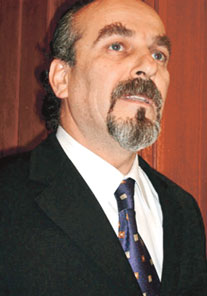
Abant İzzet Baysal Üniversitesi Rektörü Prof. Dr. Kılıç, lise yıllarına kadar hayatının yokluk içinde geçtiğini belirterek, "İlk kez 14 yaşında inşaatlarda işçilik yapmaya başladım" dedi
Abant İzzet Baysal Üniversitesi Rektörü Prof. Dr. Atilla Kılıç, çocukluğunda yaşadıkları geçim sıkıntısı nedeniyle bir dönem çay ocaklarında ocakçılık, garsonluk yaptığını, inşaat işçiliğinden kazandığı parayla üniversite bitirdiğini bildirdi.
1964 yılında Gaziantep'in Oğuzeli ilçesine bağlı Çaybaşı köyünde dünyaya dünyaya gelen Kılıç, lise yıllarına kadar hayatının yokluk içinde geçtiğini anlattı. Kılıç, "Yedi kardeştik ve ekonomik durumumuz iyi değildi. Bir eşofman ve ayakkabı alırdık. Hepsi bir numara büyük olurdu ki ağabeyimle birlikte giyerdik. Pardösümüzün olmadığı zamanlar oldu" dedi. Bursa'da öğretmen babasının kısmi felç geçirdiğini anlatan Kılıç, şöyle konuştu:
"Evin bütün sorumluğu üzerimize kaldı. Kışın odun kömür almak gerekirdi, bize kimse vermezdi. İlk kez 14 yaşında inşaatlarda işçilik yapmaya başladım."
Ekonomik zorluklardan dolayı okulu bırakma noktasına geldiğini vurgulayan Kılıç, çay ocaklarında ocakçılık, garsonluk yaptığını, inşaatlarda çalıştığını anlattı. Okulu bırakıp liseyi dışardan bitirmeyi planladığı günlerde gayret edip, Bursa Erkek Lisesi'nden mezun olduğunu söyleyen Kılıç, şöyle dedi:
"Tek hedefim Hacettepe'de fizik mühendisliği okumaktı ve 1981 senesinde kazandım. İnşaatlarda kazandığım parayla okulumu bitirdim."
Üniversitedeki göreve 1988'de öğretim görevlisi olarak başladığını kaydeden Kılıç, o dönem Rektör Vekili olan Prof. Dr. Nihat Bilgen'in "Alışın buralara, ilerde rektör olursunuz" dediğini belirterek, "Ancak aklımın ucundan rektör olmak hiç geçmemişti" diye konuştu. Prof. Kılıç, 2006'da rektörlüğe atanmıştı.
Subscribe to:
Comments (Atom)

 Posts
Posts

